Copper or aluminium: choosing a conductor material
Copper conducts better; aluminium is lighter and costs less. We compare the two metals on the properties that matter in cable manufacturing.
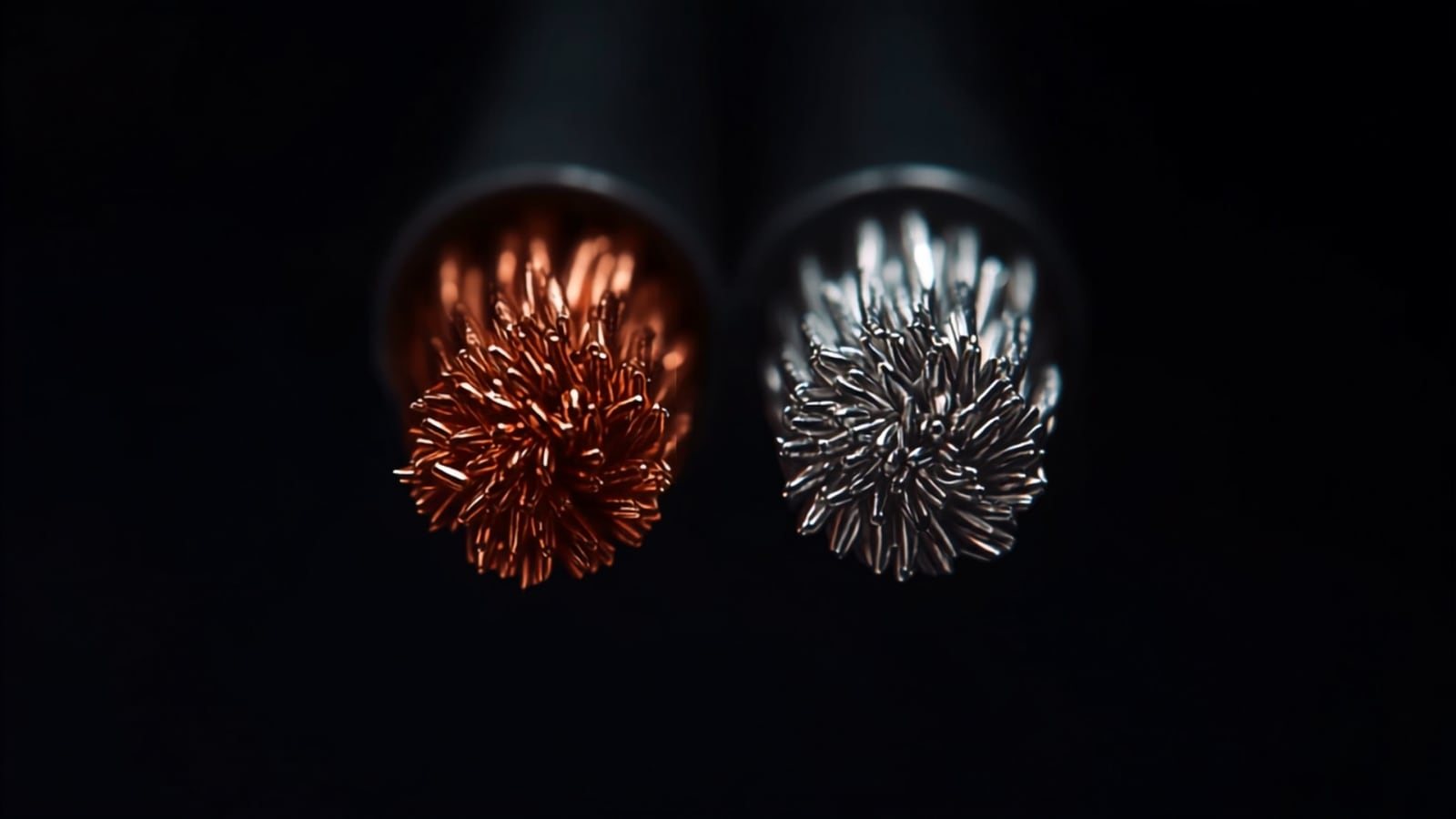
Copper and aluminium are the two main metals for current-carrying conductors. Choosing between them is a balance of electrical properties, weight, cost and installation conditions.
Conductivity
Copper conducts better: 100% IACS against about 61% for electrical-grade aluminium. For the same resistance, an aluminium conductor therefore needs a cross-section roughly 1.6 times larger than a copper one.
Weight
Aluminium has a density of 2.7 g/cm³, copper 8.9 g/cm³. Even with the larger cross-section, an aluminium conductor of the same conductance weighs about half as much as a copper one, which matters for overhead lines and long routes.
Mechanical properties and installation
Copper is stronger, tolerates repeated bending better and is easier to join. Aluminium conductors need dedicated lugs and a strictly followed installation procedure.
Where each is used
- Copper — flexible cables, winding wires, electrical products and critical connections
- Aluminium — large-section power cables, overhead lines and long trunk routes
Conductor construction and cross-sections for both metals are set by GOST 22483-2012 (IEC 60228). Aluminium conductors are drawn from wire rod made to GOST 13843-78, including the 9.5 mm diameter.