Enamelled wire: what thermal classes mean
The thermal class tells you the temperature a wire can work at for its whole service life. We look at classes 130 and 155 °C and the IEC 60317 series.
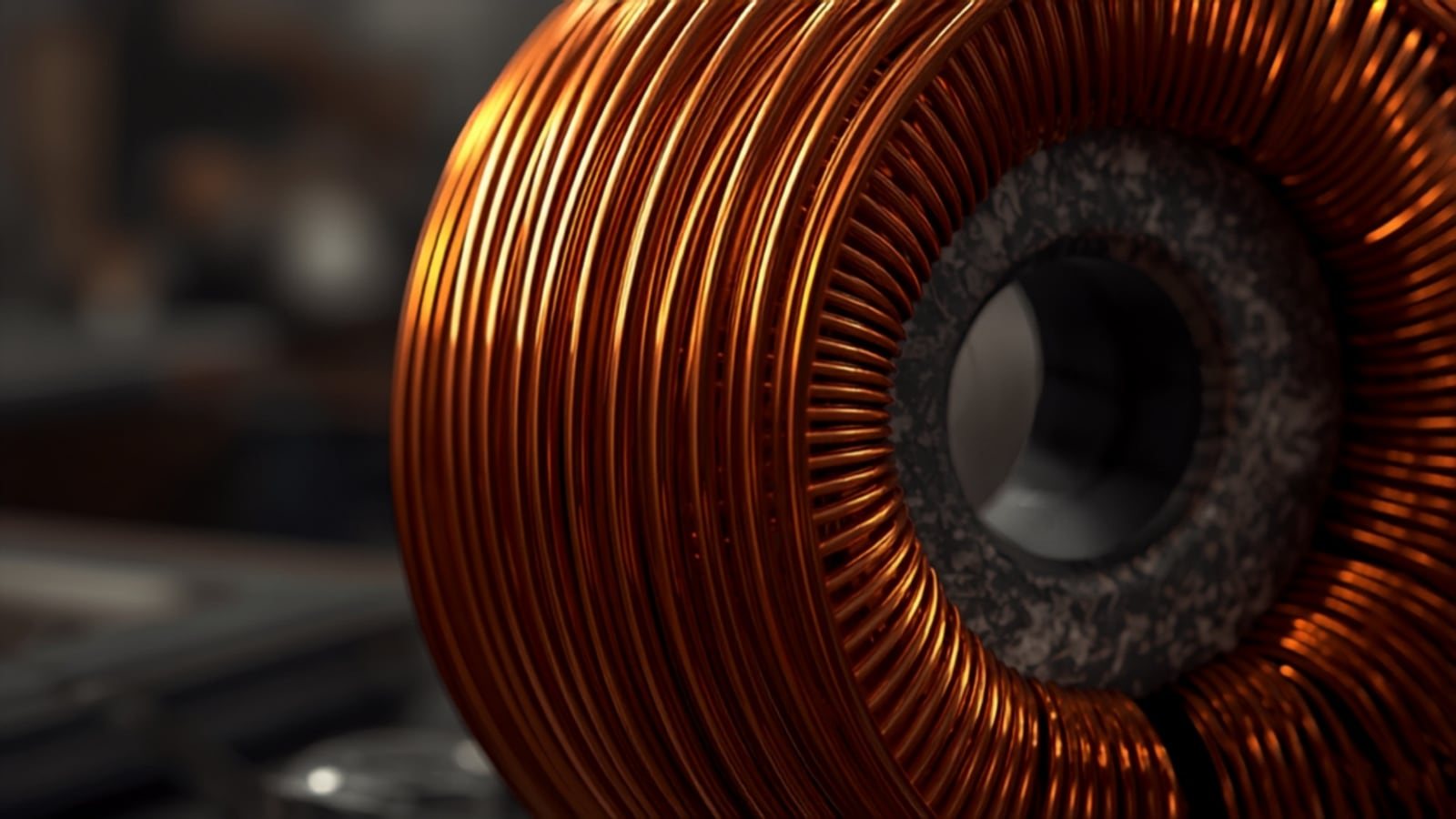
Enamelled, or winding, wire is copper wire with a thin varnish insulation. It is wound into the coils of motors, transformers, relays and other electrical equipment. The key property of the insulation is its thermal class.
What a thermal class is
It is the highest temperature at which the insulation keeps its properties for the intended service life. Thermal classes are defined in IEC 60085, and the requirements for specific wire types in the IEC 60317 series.
Classes 130 and 155 °C
- 130 °C (class B) — general-purpose wires such as PETV-2
- 155 °C (class F) — for more heavily loaded windings, such as PET-155
- 180 °C and above — for special applications with high thermal loads
What else to look at
Besides the class, a wire is described by its nominal copper diameter, insulation build (Grade 1 or Grade 2), breakdown voltage and solderability. These are chosen to suit the winding process and the product's operating conditions.
When ordering, it helps to state the type of product, the operating temperature and the winding method — that makes it easier to choose the wire grade and packaging.